It started with a mailing list. In September 1992, Eric Hughes, Timothy C. May, and John Gilmore convened the first physical meeting of what would become the cypherpunk movement at Gilmore's San Francisco office. They were programmers, mathematicians, and libertarians who had arrived at the same conclusion by different paths: that cryptography was not merely a technical tool but a political one — perhaps the most powerful political instrument ever invented.
Hughes wrote the Cypherpunk Manifesto the following year. Its opening line remains the most precise statement of the movement's politics: "Privacy is necessary for an open society in the electronic age." Not nice to have. Not a preference. Necessary — the way oxygen is necessary, the way the absence of forced entry is necessary.
May's Crypto Anarchist Manifesto, written four years earlier in 1988, predicted with remarkable accuracy what was coming. "A specter is haunting the modern world, the specter of crypto anarchy," he wrote, riffing deliberately on Marx. He understood that strong cryptography would alter the relationship between individuals and institutions — that once mathematics made it impossible to intercept communication, the architecture of control would have to change or collapse.
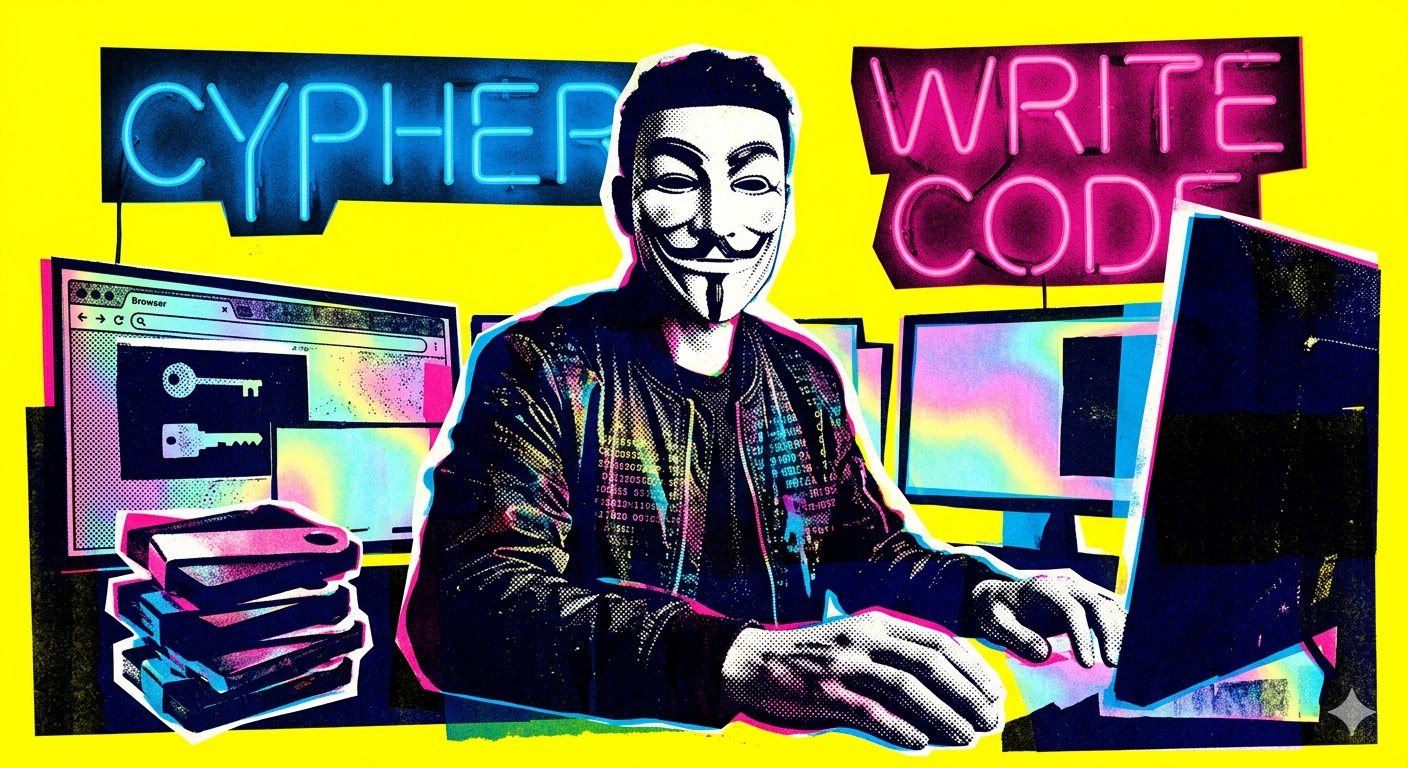
The mailing list they established generated extraordinary technical work over the following decade. PGP, SSL, Tor, Bitcoin — all either developed by or directly influenced by cypherpunks. What made them different from earlier privacy advocates was their refusal to petition. They did not lobby governments for rights. They wrote code. They deployed tools. They understood that the only reliable answer to surveillance is technical. Laws change. Mathematics does not.
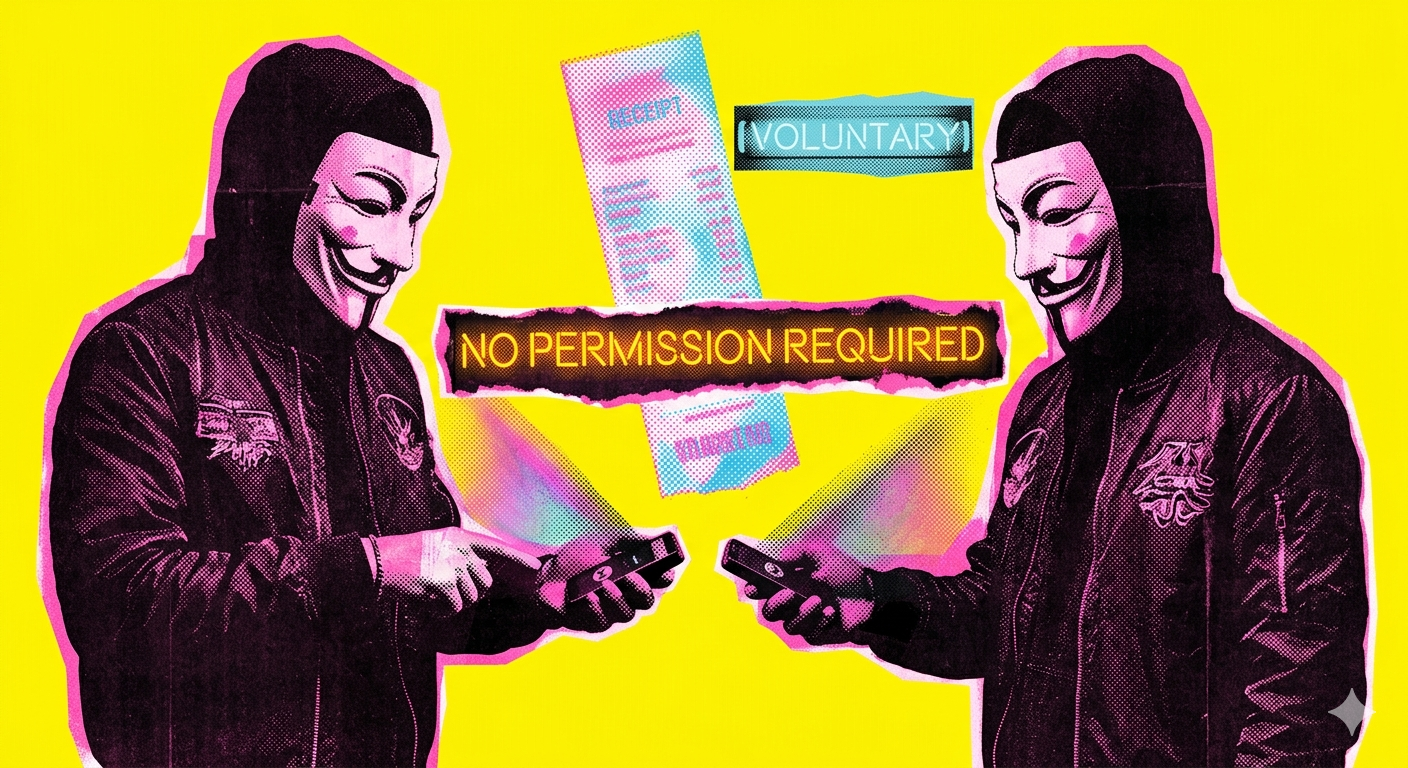
The phrase "not your keys, not your coins" is the shortest, most accurate summary of financial sovereignty ever written. It describes a simple technical reality: if someone else controls the private keys to a wallet, they control the assets. You have a number in a database. That is not the same as possession.
Every exchange collapse — from Mt. Gox in 2014 to FTX in 2022 — has proven the same lesson at scale. When you trust a custodian, you inherit all their risks: mismanagement, fraud, regulatory seizure, bankruptcy. The history of finance is largely the history of intermediaries failing the people who trusted them. Cryptography offers a different architecture: one where trust is replaced by mathematics and personal custody.
Self-custody is not complicated. A hardware wallet — a small device that stores your private keys offline, never exposing them to the internet — is the baseline. Feather Wallet for Monero. A hardware device like Trezor or Coldcard for Bitcoin. A passphrase written on steel and stored in two physical locations. These are not exotic measures. They are the minimum viable standard for financial sovereignty.
The deeper point is philosophical. Self-custody is the practical expression of a belief: that you are competent to manage your own affairs. That you do not need a bank, a government, or a corporation to hold your assets on your behalf. Every time you take custody of your own keys, you are making that belief concrete. You are opting out of one kind of dependency and into another kind of responsibility. That trade is always worth making.
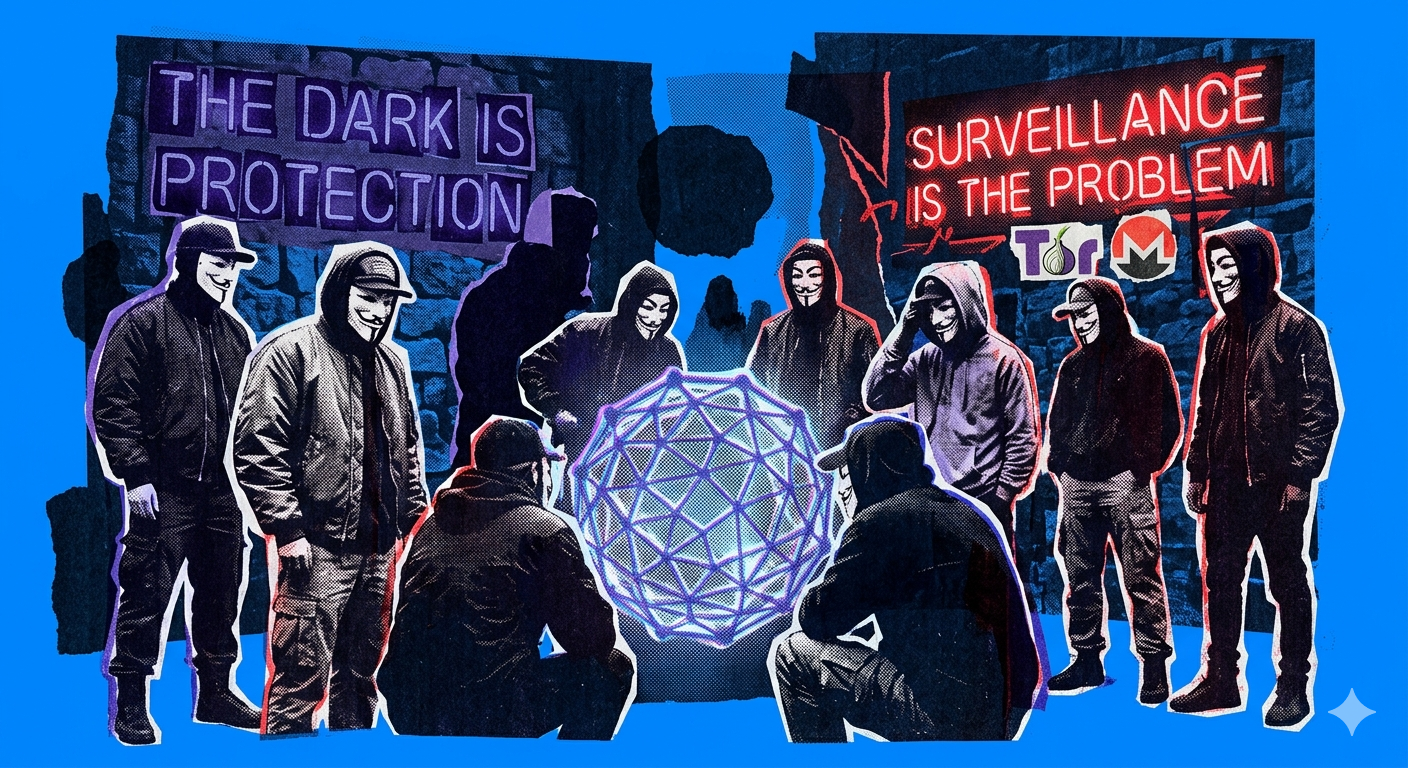
In 2013, Edward Snowden disclosed documents revealing that the NSA, in coordination with GCHQ and the other members of the Five Eyes alliance, had built a global surveillance apparatus of unprecedented scope. PRISM allowed direct access to servers at Apple, Google, Microsoft, Facebook, and others. XKeyscore could search the full body of internet traffic in near-real time. MUSCULAR tapped the fiber optic cables connecting Google and Yahoo data centers.
This was not a temporary emergency measure. It was infrastructure — permanent, expensive, carefully engineered, and deeply integrated into the operating systems of the internet. The companies whose servers were being accessed had, in many cases, cooperated. The legal frameworks authorizing it were secret. The oversight mechanisms were captured by the same agencies they were supposed to govern.
What Snowden revealed was the surveillance state fully formed: not a future possibility but a present reality. And that was over a decade ago. The systems have not been dismantled. They have grown. Mass surveillance is now a baseline assumption of the digital environment, not an exceptional intrusion.
The response to this reality cannot be political alone. Legislators who were briefed on these programs approved them or said nothing. Courts operating under secrecy provisions upheld them. The only mechanisms that have meaningfully constrained mass surveillance have been technical ones: the widespread adoption of HTTPS following the Snowden revelations, the growth of end-to-end encrypted messaging, the development of private payment systems. Every technical deployment of privacy is a structural answer to a structural problem.
Identity in the digital age is being weaponized. The social media profile is not a neutral representation of self — it is a surveillance instrument, a profile compiled from your expressions, associations, locations, and interests, sold to advertisers and made available to governments. Your digital identity is not yours. It belongs to whoever hosts it.
Biometric identification is accelerating this loss of control. Face recognition systems deployed in airports, shopping centers, and public spaces can identify individuals from government photo databases without any action on their part. Gait recognition can identify people from camera footage even when their faces are obscured. The body itself is becoming a surveillance surface.
The counter-strategy is compartmentalization: different identities for different contexts, none of them linking to a master profile. Pseudonyms, separate email addresses, separate devices for sensitive activities. This is not deception — it is the digital equivalent of the right every person has always had to present different aspects of themselves in different contexts. The grocery clerk does not need to know your politics. Your government does not need to know your medical history. Your employer does not need to know your religion.
The goal is not to disappear. It is to control the terms on which you are known. Sovereign identity means deciding, for each context, what information you share and with whom — rather than having that decision made for you by platforms whose business model depends on knowing everything about you and selling access to that knowledge.
Zero-knowledge proofs solve one of the oldest problems in trust: how do you prove you know something without revealing what you know? The mathematical answer, developed in the 1980s by Goldwasser, Micali, and Rackoff, is a protocol in which one party — the prover — convinces another party — the verifier — that a statement is true, without transmitting any information that would allow the verifier to prove it to someone else.
In practical terms: a ZK proof can prove that you are over 18 without revealing your date of birth. It can prove that you have sufficient funds without revealing your balance. It can prove that you are a citizen of a country without revealing your name or identity number. It decouples verification from disclosure — the fundamental shift required for privacy-preserving digital identity.
Zcash and Monero deploy ZK-adjacent cryptographic techniques to make transaction amounts and sender information private by default. The zk-SNARK technology used in Zcash's shielded transactions allows a node to verify that a transaction is valid — that no coins are created out of nothing, that the sender had sufficient funds — without knowing who sent what to whom.
This is not theoretical. These systems are deployed, used daily, and growing in capability. The cryptographic foundation of privacy is already built. The question is whether enough people choose to use it.
Every meaningful freedom has always ultimately rested on individuals who refused compliance. The printing press did not dismantle censorship — the printers who ran forbidden texts did. Encryption did not defeat surveillance — the developers who wrote and deployed it did. Systems change because people make specific technical and behavioral choices that the systems cannot easily override.
Sovereignty is not a political theory. It is a practice. It means making decisions — about your money, your data, your communications, your identity — that keep those decisions within your own control rather than delegating them to institutions that do not share your interests. It is not an ideology that requires a revolution. It is a set of daily choices that accumulate into a different kind of life.
The philosophical tradition of individual sovereignty runs through figures as different as Lysander Spooner, Max Stirner, Ayn Rand, and Murray Rothbard — each approaching from a different angle, but converging on the same core claim: that the individual, not the collective, is the basic unit of moral reality. Your life is yours. Your labor is yours. The product of your labor is yours. These claims are neither comfortable nor universally accepted, which is exactly why they require technical enforcement rather than political consensus.
Cypherpunk was always the practical wing of individual sovereignty theory. It said: stop arguing about what rights people should have, and build systems that make those rights functional regardless of what anyone argues. Code that enforces privacy is worth more than a thousand legal frameworks that promise it.